Crypto Arbitrage Opportunities Explained
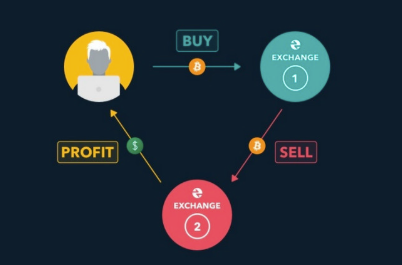
Crypto arbitrage seeks profits from price differences of the same asset across venues or pairs. Markets react at different speeds, and data feeds diverge, creating gaps. Traders monitor quotes, manage liquidity, and execute fast orders to lock in margins. Strategies include spatial, triangular, and cross-market moves, each with its own costs and risks. Success hinges on disciplined risk control and clear fee assessment, but the path remains uncertain as the landscape evolves. The next steps reveal how to spot and sustain opportunities.
How Crypto Arbitrage Works in Practice
Crypto arbitrage exploits price differences of the same cryptocurrency across different exchanges. In practice, traders monitor quotes, execute rapid orders, and manage risk amid changing liquidity and fees. Liquidity dynamics shape available volume and timing, while latency implications affect order fill speed and profitability. Systemic frictions, transfer times, and withdrawal limits test execution discipline and risk tolerance for freedom-minded participants.
Where Price Gaps Come From Across Exchanges
Price gaps across exchanges arise from a mix of structural and situational factors. They reflect divergent price sources, reaction times, and order book dynamics.
Exchange latency creates timing mismatches, while liquidity depth shapes available volume and impact.
Arbitrage models expose these frictions, revealing how cross-market pricing diverges. Understanding gaps demands disciplined analysis of liquidity, fees, and execution efficiency, not guesswork.
Core Strategies: Spatial, Triangular, and Cross-Market
In this section, the focus shifts to concrete arbitrage playbooks: spatial, triangular, and cross-market strategies. Traders exploit spatial inefficiencies across venues, aligning price differentials with execution speed and liquidity.
Triangular dynamics unfold within a single platform via three-legged swaps, while cross-market moves leverage disparate quotes.
Clarity, discipline, and timing define disciplined, freedom-driven opportunity recognition in evolving markets.
Risk, Fees, and Due Diligence for Arbitrage Success
Effective arbitrage hinges on disciplined risk management, transparent fee assessment, and thorough due diligence to prevent surprises that can erode thin margins.
The discussion outlines practical risk management frameworks, fee structures, and the necessity of due diligence in exchanges, liquidity, and settlements.
With disciplined oversight, traders minimize volatility, ensure transparent costs, and sustain profitable opportunities through deliberate, methodical evaluation.
See also: hdhud4u
Frequently Asked Questions
What Are the Tax Implications of Crypto Arbitrage Profits?
Tax treatment varies by jurisdiction, often treating profits as capital gains or ordinary income, with withholding and reporting obligations; international compliance requires careful tracking of basis, timestamps, and currency conversions to avoid penalties or audits. Freedom-seeking traders should stay informed.
Which Tools Reliably Detect Real-Time Arbitrage Opportunities?
The question: Which tools reliably detect real-time arbitrage opportunities? They monitor arbitrage timing and exchange gaps, delivering alerts through dashboards and APIs. They emphasize latency, liquidity, and risk controls, enabling freedom-oriented traders to act decisively and responsibly.
How Does Liquidity Depth Affect Arbitrage Feasibility?
In a hypothetical case, liquidity depth limits arbitrage feasibility as thin books slow execution; broader liquidity depth enables rapid trades. Market fragmentation exacerbates gaps, demanding cross-exchange access to exploit price discrepancies while maintaining risk controls.
Can Automated Bots Outperform Manual Arbitrage Decisions?
Automated bots can outperform manual decisions in speed and data processing, but no relevant topic guarantees consistent profitability; no clear connection to risk management remains essential, as human judgment still helps navigate slippage, market sentiment, and unforeseen disruptions.
What Are Common Regulatory Risks Across Jurisdictions?
A regulatory maze resembles a compass under pressure: risky, yet navigable. Common regulatory risks include compliance burdens, cross border licensing challenges, varying disclosure rules, and enforcement uncertainty; firms must maintain regulatory compliance and monitor evolving frameworks across jurisdictions.
Conclusion
Crypto arbitrage is a high-speed, high-stakes game where tiny price gaps become colossal windows of opportunity. When markets dance out of sync, traders sprint to lock in margins as fees, latency, and liquidity battle for supremacy. A disciplined eye spots data fissures, executes with surgical precision, and white-knuckles through slippage. Yet the margins shrink, the race tightens, and only those with flawless due diligence, ironclad risk controls, and relentless speed turn fleeting gaps into durable gains. Precision wins. Momentum follows.